
A plan is agreed in a deck, rebuilt in a spreadsheet, and executed in a platform that knows none of the reasoning. By the time it is live, nobody can answer why a rule exists.
The value of an engagement plan is not the document. It is whether its reasoning survives execution.
Five areas, one object
Each of these is normally its own document. Here they are views onto the same thing, which is what lets a decision made in the first one still be legible in the last.
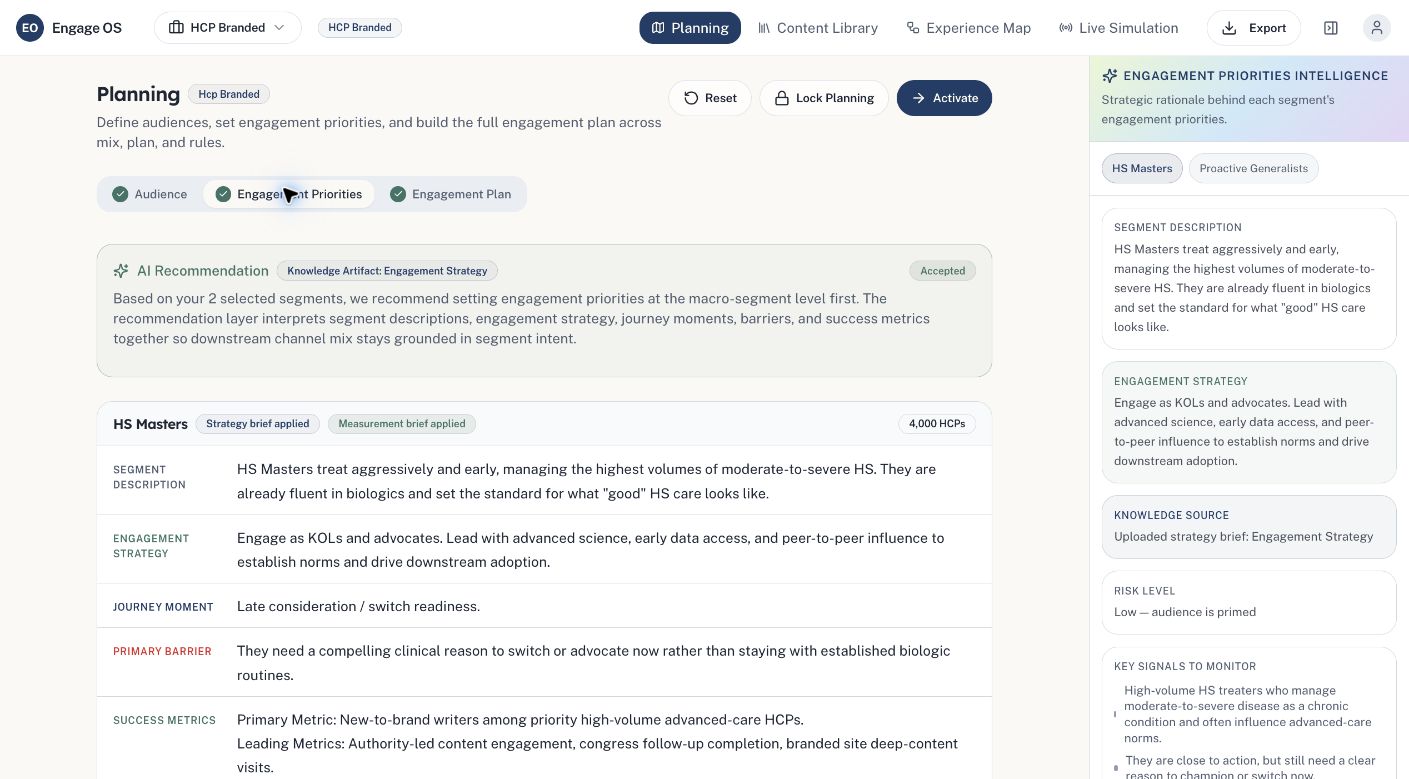
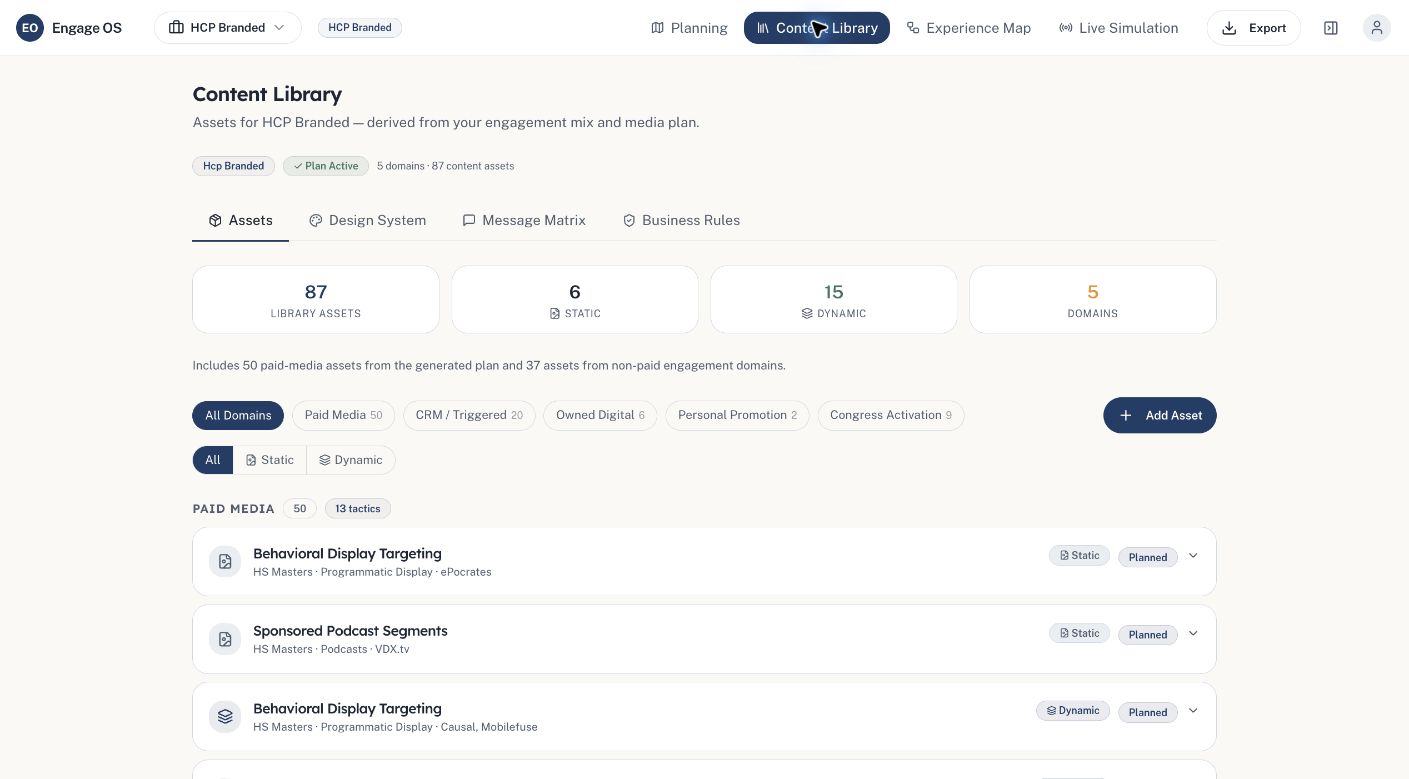
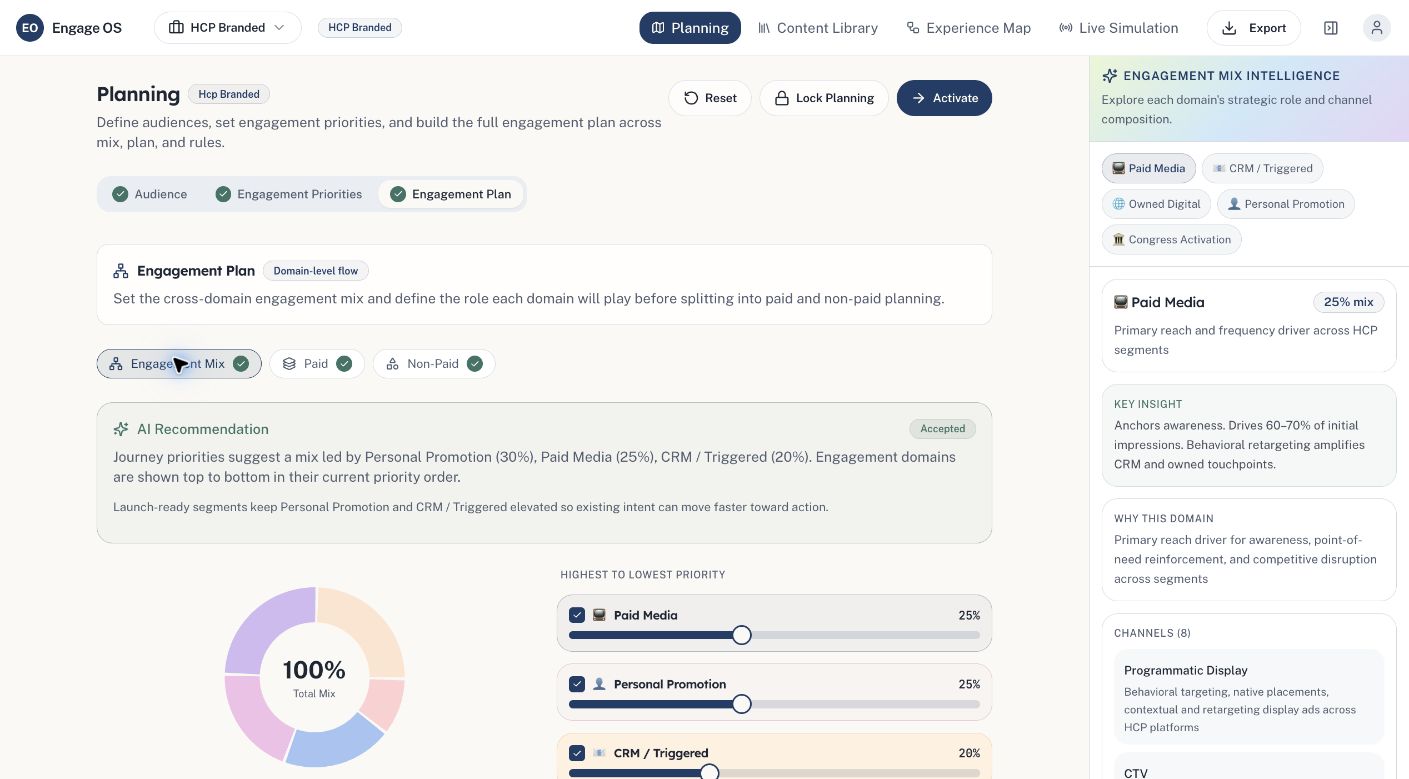
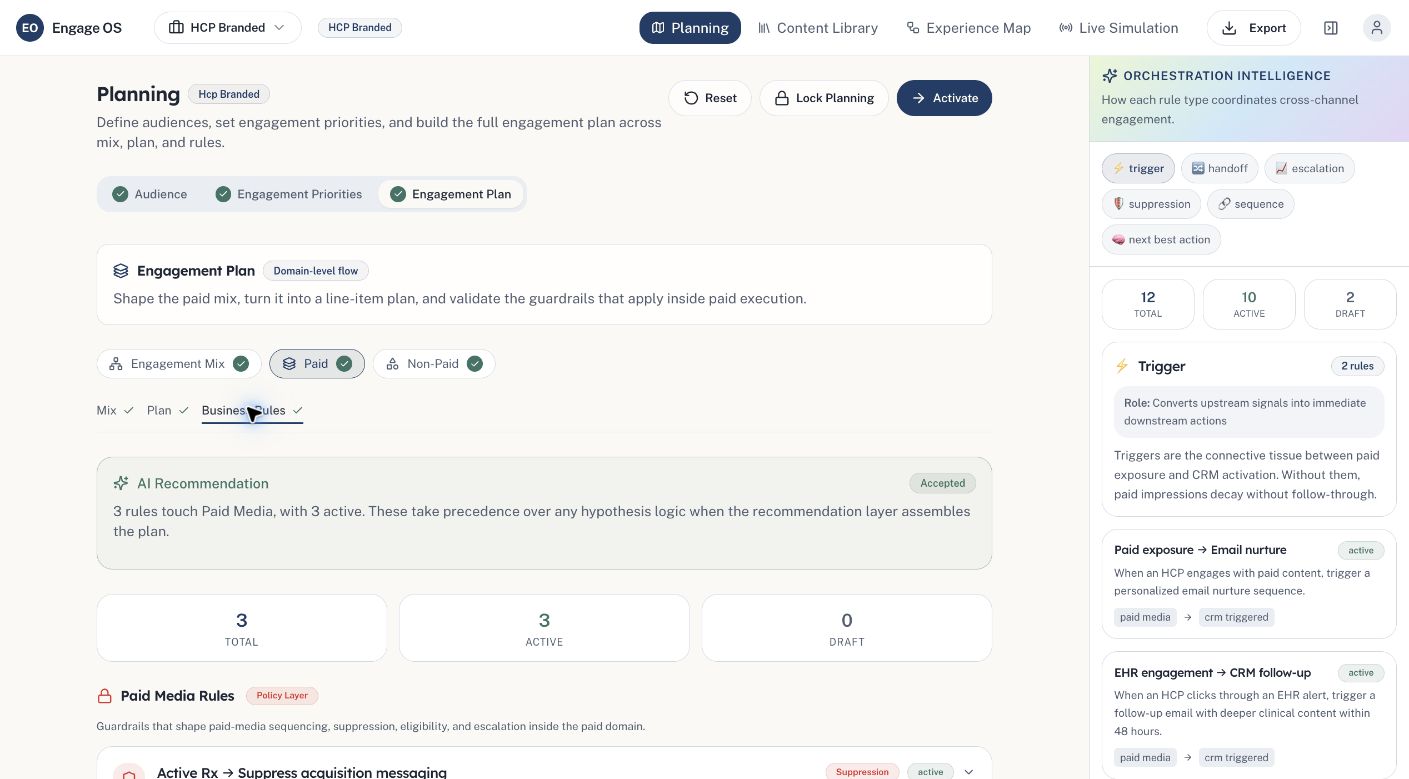
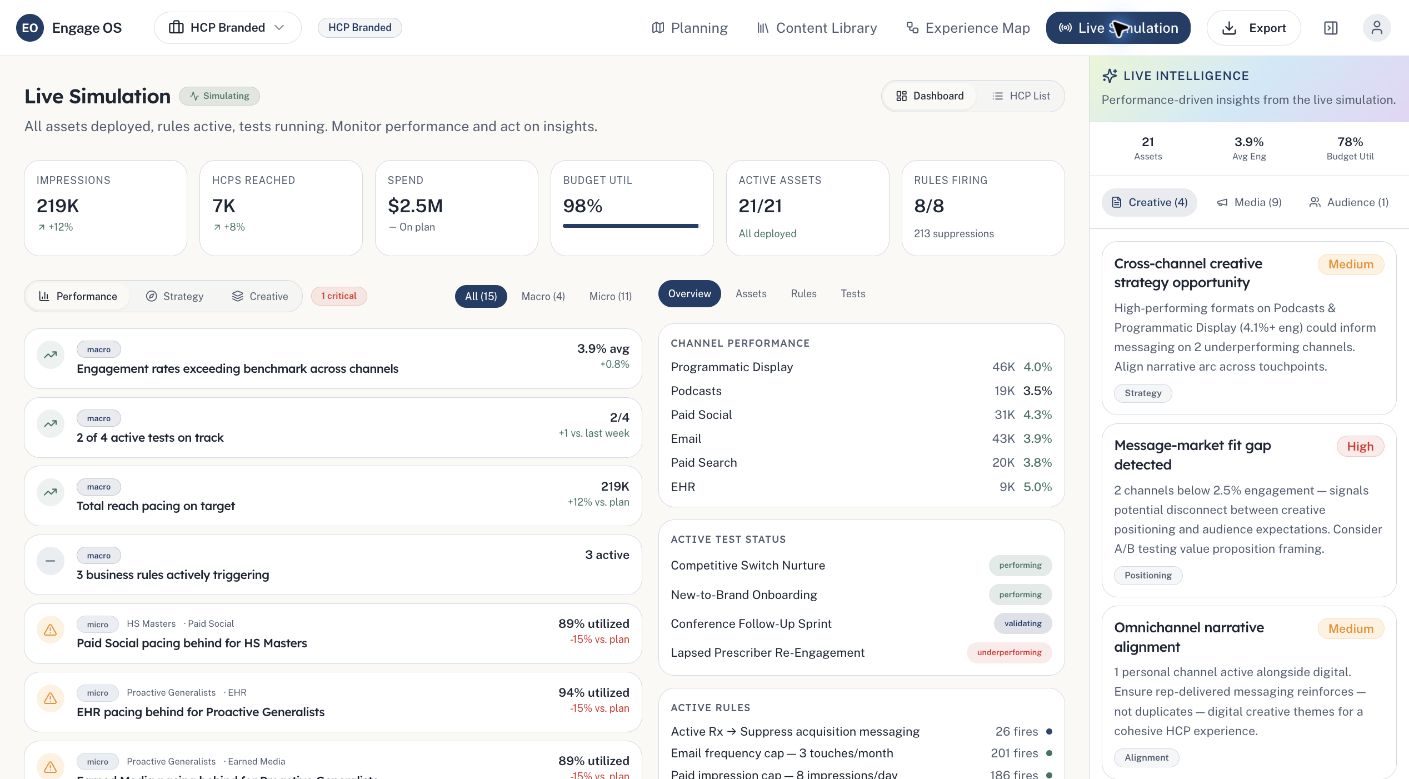
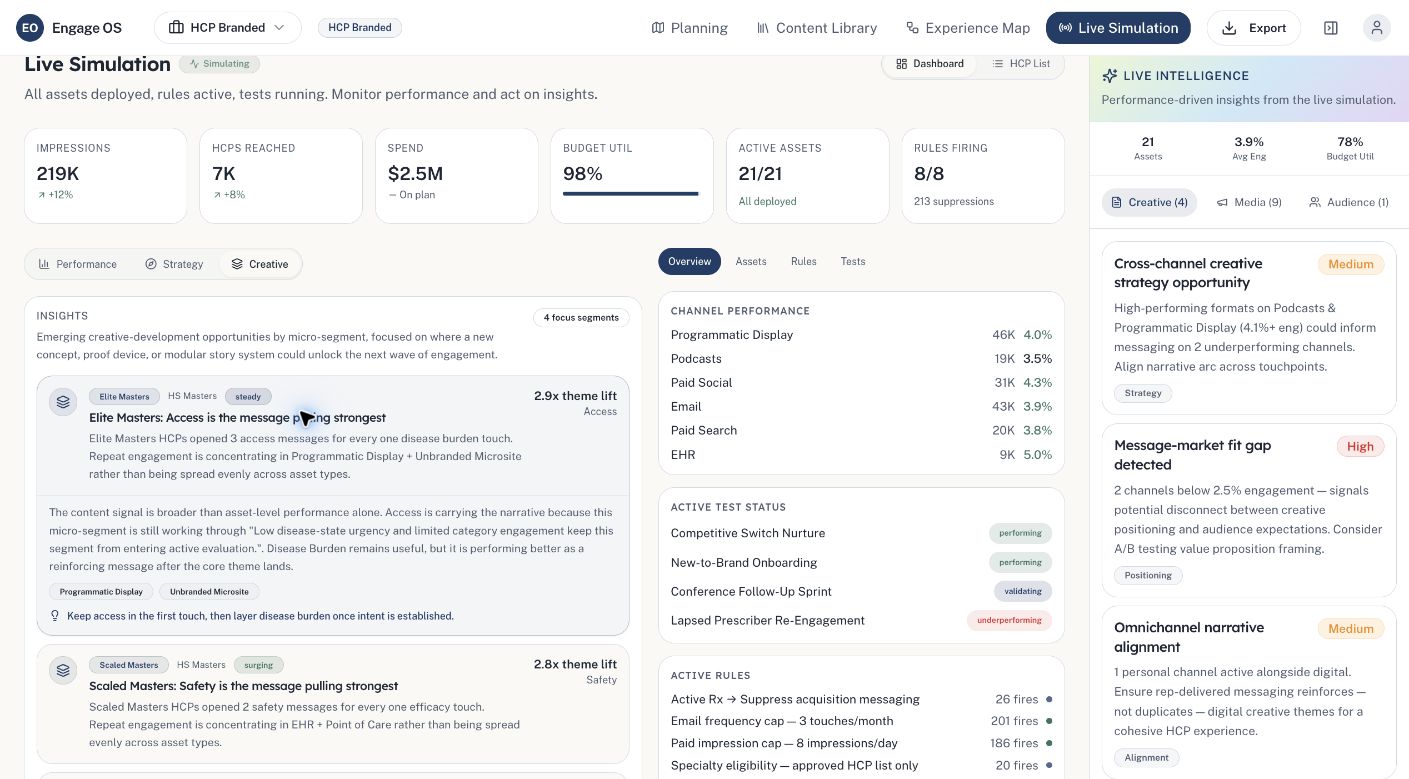
Two more readings of the same live data
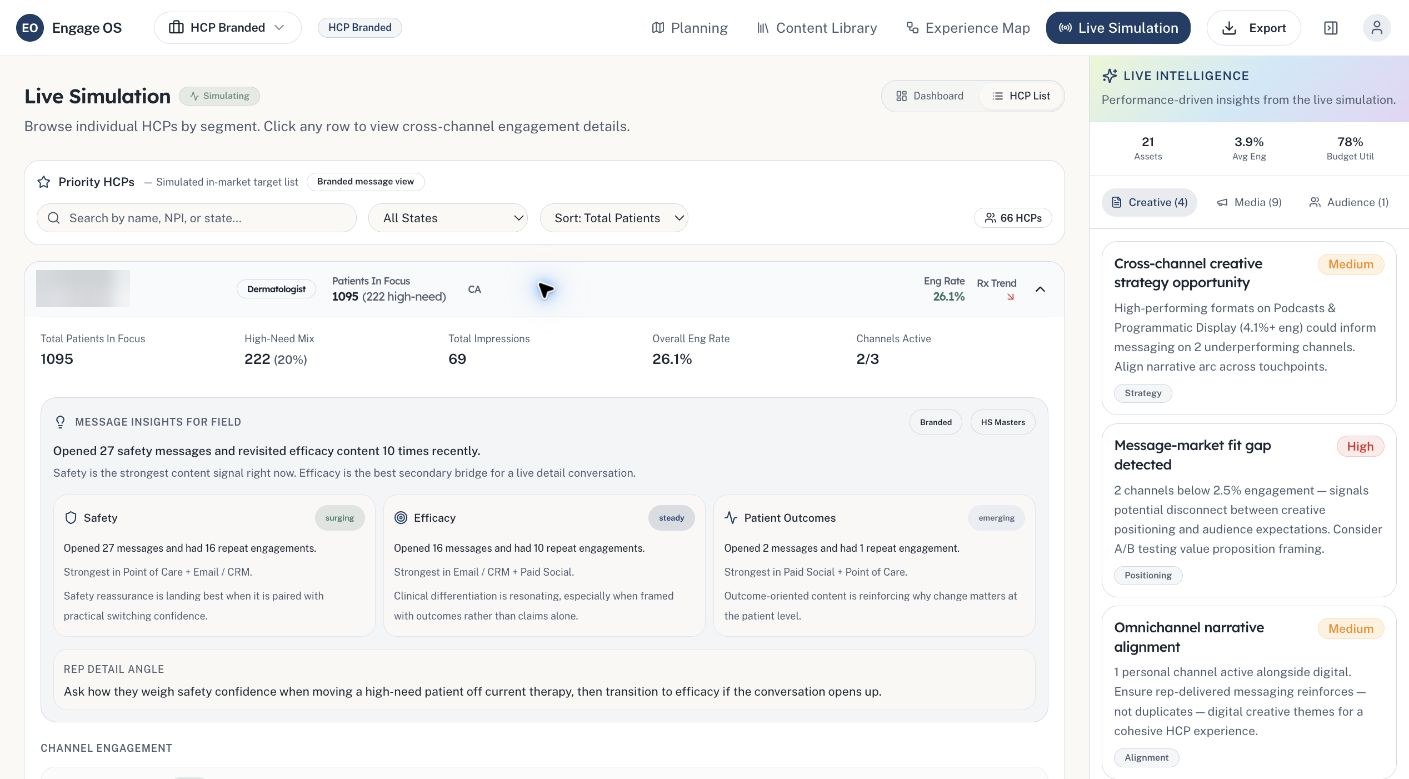
The measurement view is not only a scoreboard. The same signals can be read as a creative question, and resolved down to a single prescriber and what a rep would open with.
What it taught me
- Structure is the useful role for AI here. Not generating copy. Taking fragmented inputs and proposing the shape of a plan, which people then edit, reject and commit to themselves.
- Plain English makes logic debatable. Writing each rule as a condition and an action in ordinary language meant strategists could argue with it directly, instead of describing what they wanted to someone who would then write it.
- Rehearsal changes the conversation. Simulating before activation moved the argument from whether the plan feels right to what it is likely to make happen.
On what’s shown here. Every screen above is a neutral demo brand built for this purpose. No client or product appears. The segment names, figures, performance and rules are all simulated, including the therapeutic area, which is named only so the demo reads like real planning. Nothing is live until someone makes it live: activation stayed a separate, deliberate mode rather than an auto-save.
Built in React, TypeScript and Vite.
Talk to the site
Ask it what this page left out.
A voice assistant runs on every page here. It reads a handful of files I wrote by hand, it won’t pretend to be me, and there’s a written list of things it refuses to discuss. Client specifics are on that list.
Needs a microphone.